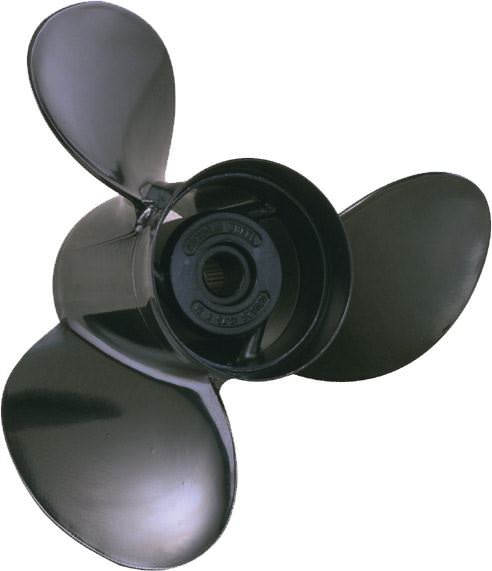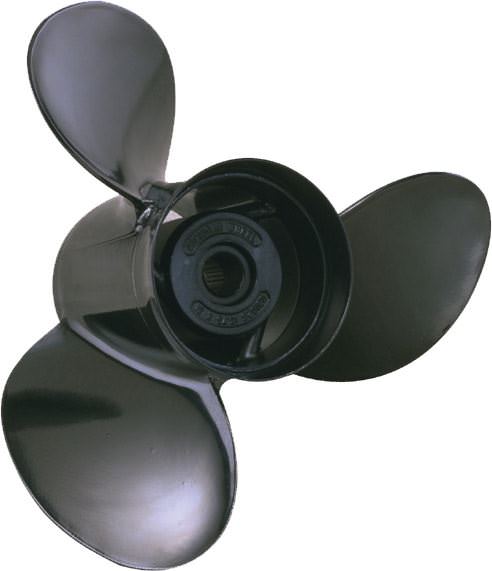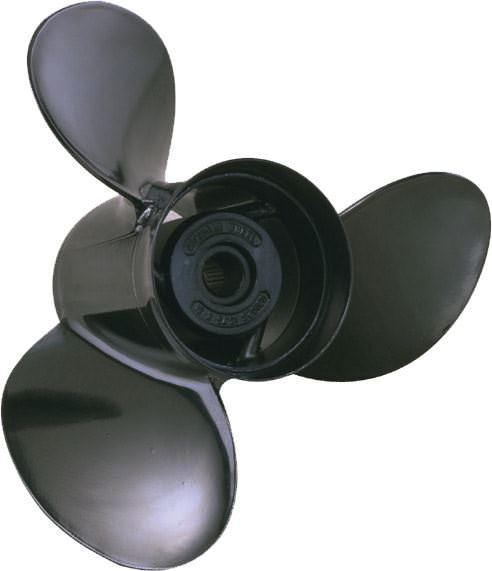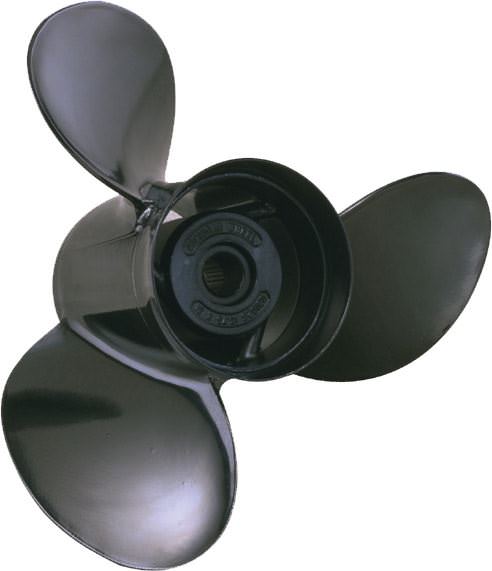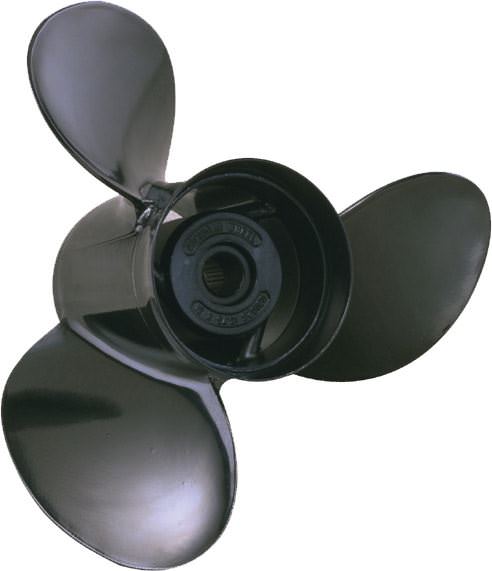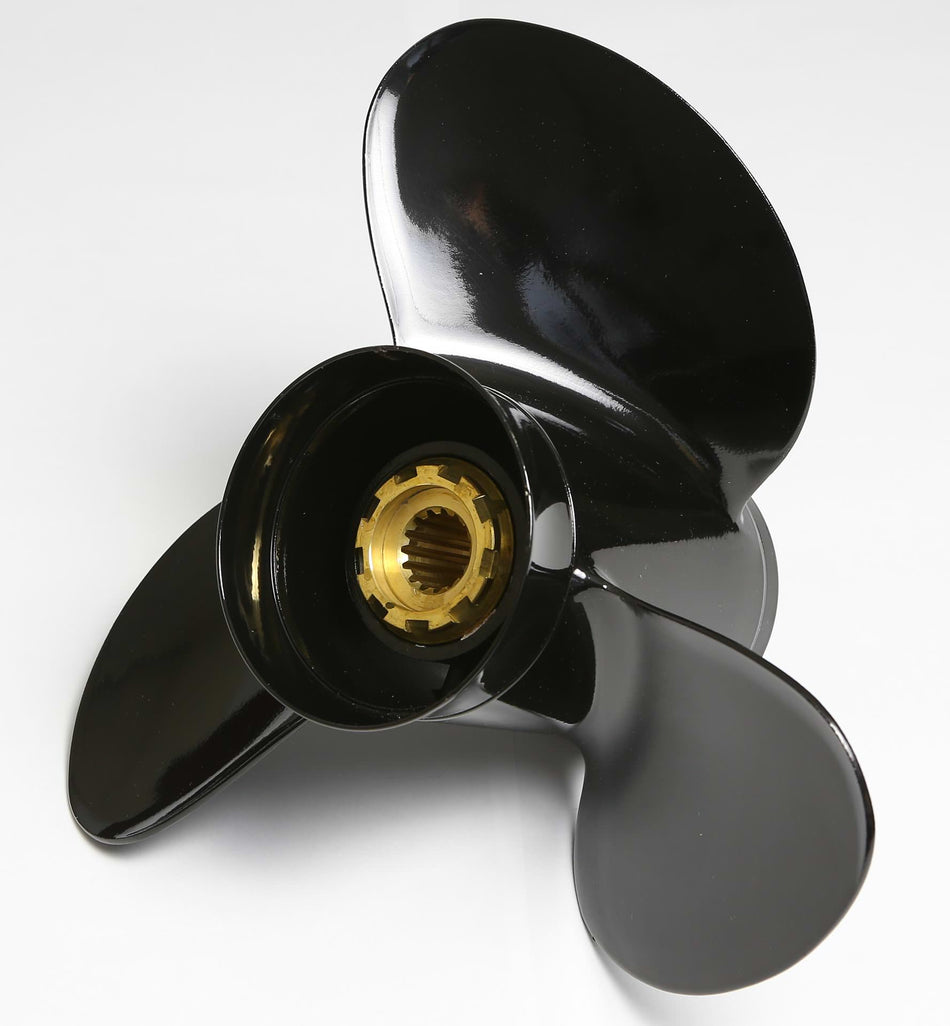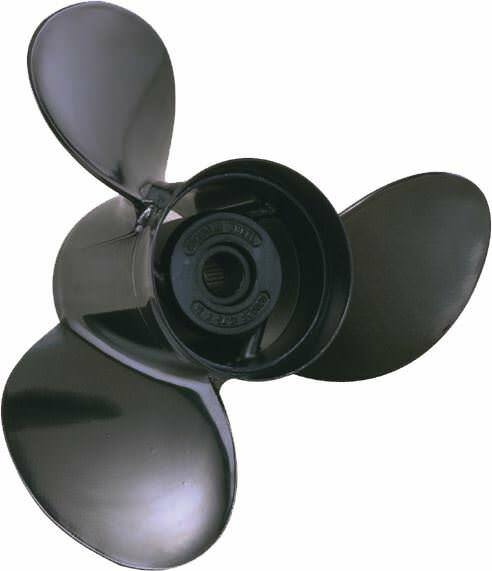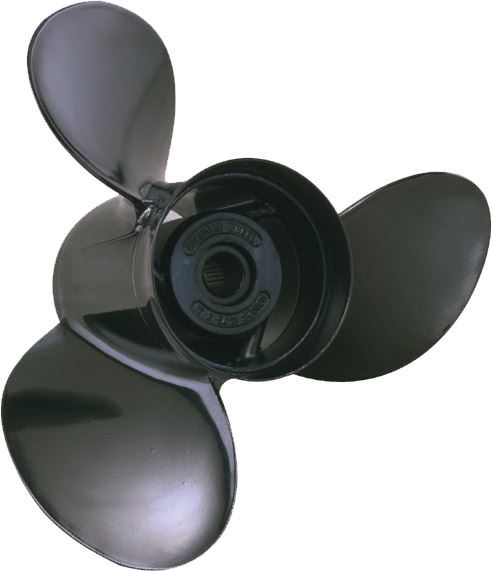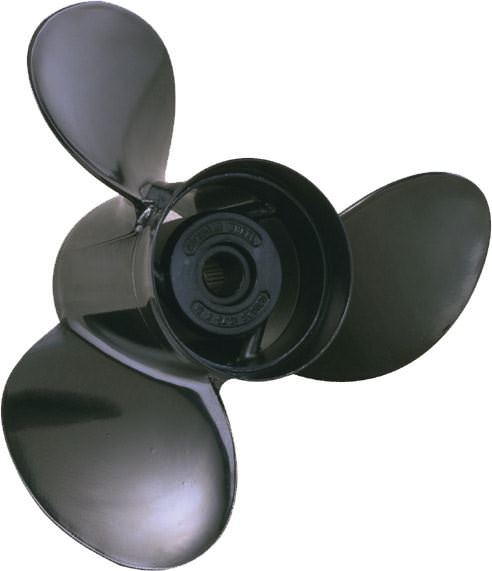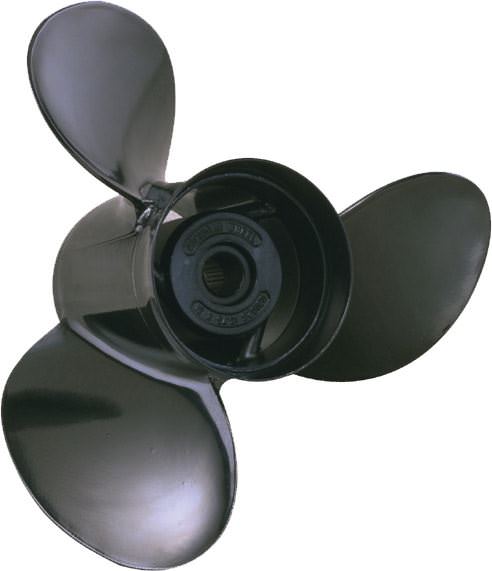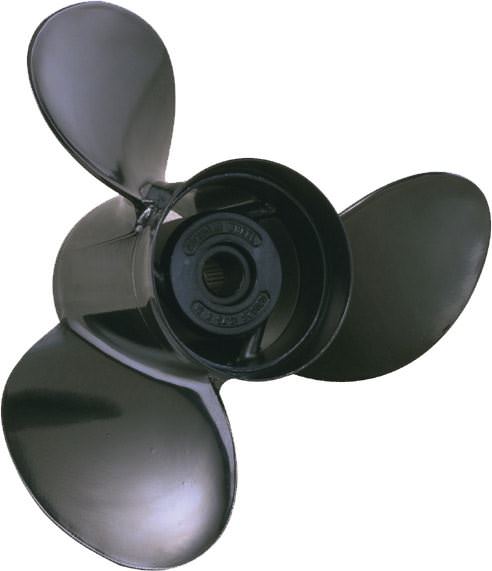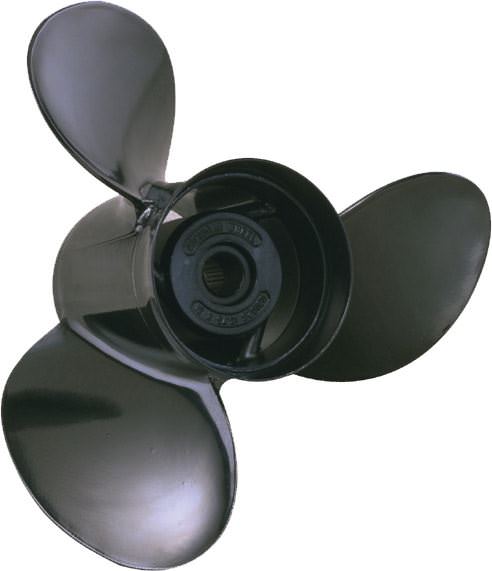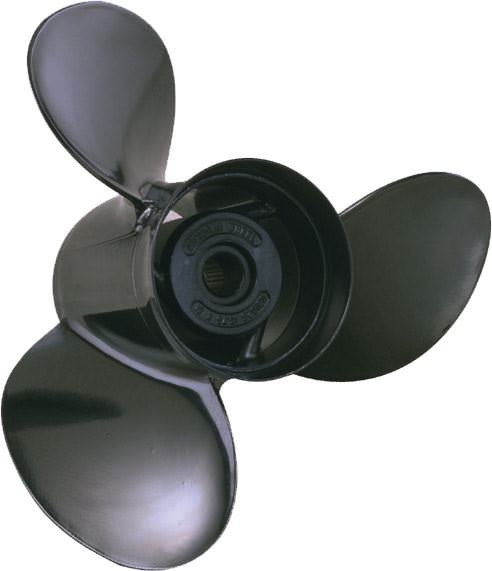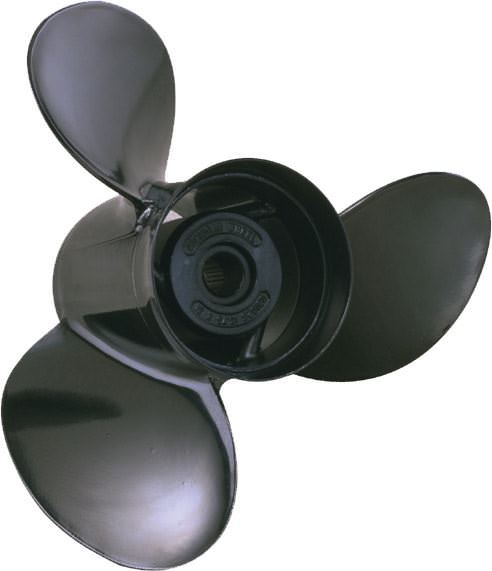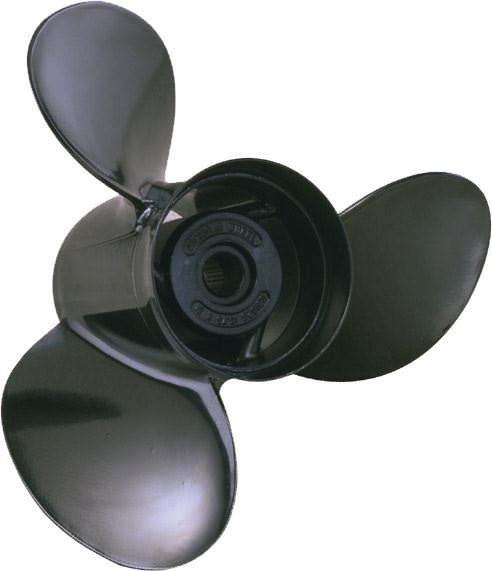
yamaha propeller, yamaha prop, yamaha propellers, yamaha props, yamaha outboard props, yamaha outboard propellers, propellers for yamaha outboards, yamaha outboard prop, prop for yamaha outboard, yamaha outboard propeller, propeller for yamaha outboard, props for yamaha outboards, yamaha stainless prop, yamaha stainless props, yamaha stainless propellers, yamaha prop selection, yamaha boat propellers, yamaha boat propeller, yamaha boat props, yamaha stainless propeller, yamaha outboard propeller selection

x
3-Blade vs. 4-Blade Yamaha Propellers.    
3-Blades
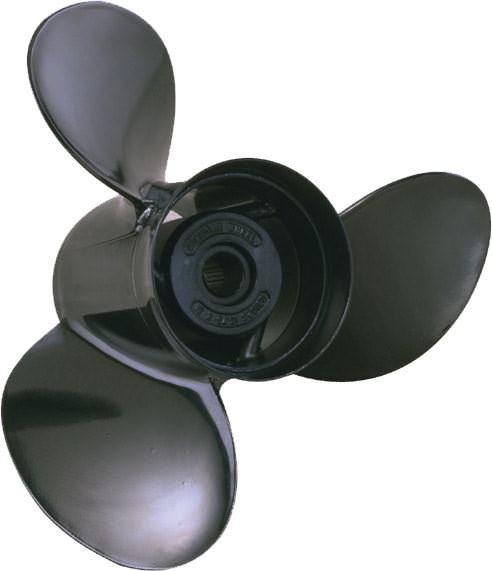
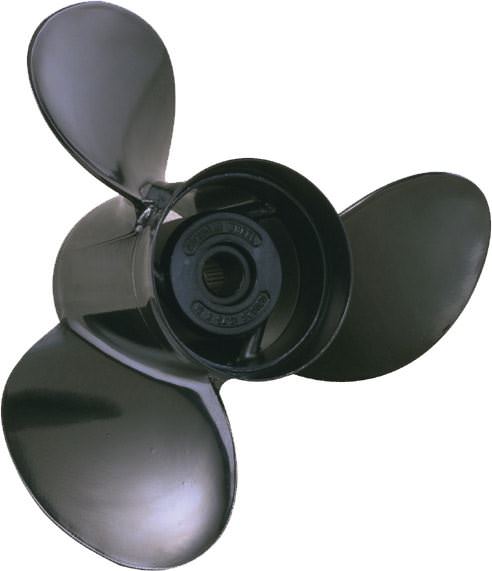
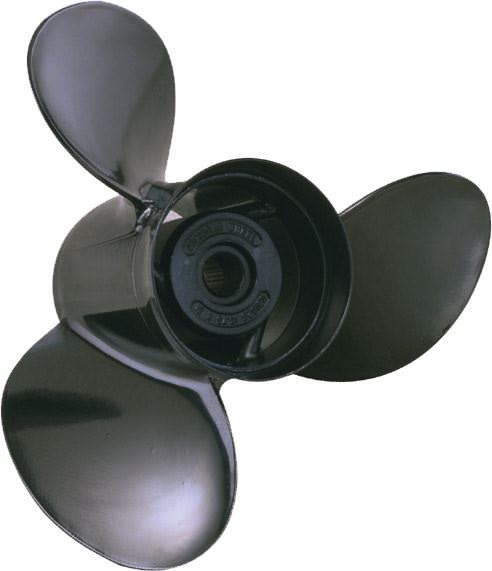
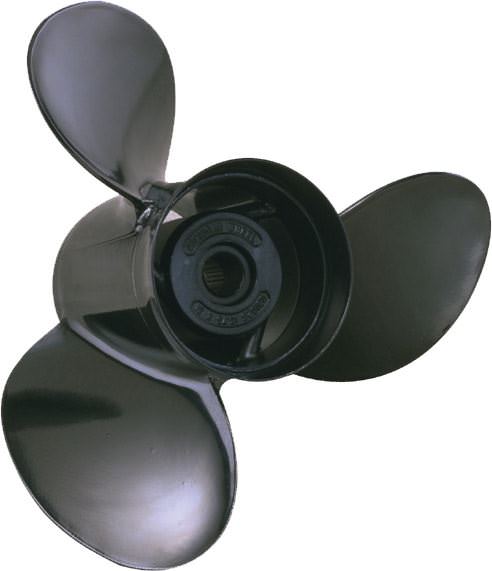
3-blade Yamaha props are great on most boats as they offer good all around performance, better efficiency, and can achieve higher speeds. Switching from 4 to 3-blades generally requires a 1" pitch increase.
3-Blade vs. 4-Blade
4-Blades
4-blade Yamaha props work well with bass, pontoon & high performance boats as they provide better acceleration, keep a boat on plane with fewer RPM's, and produce less vibration at high speeds. Switching from 3 to 4-blades generally requires a 1" pitch decrease.

Close Window
x
Aluminum vs. Stainless Steel Yamaha Propellers.    
Aluminum
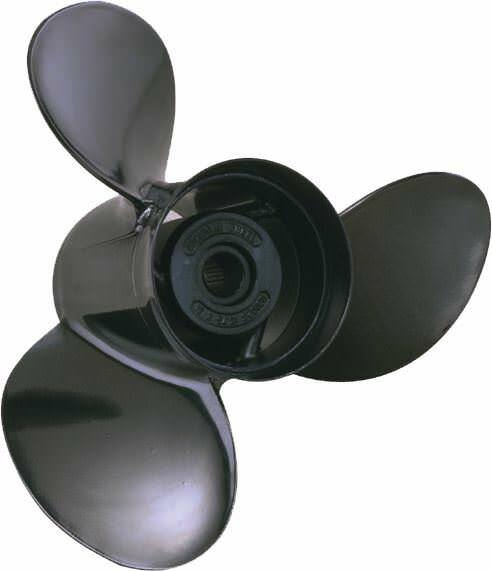
Aluminum Yamaha props are a great choice for small and medium sized boats. They are inexpensive and under normal conditions can last for many years. When running your boat in an area where striking the bottom is likely, aluminum blades can flex, helping prevent damage to your engine.
Aluminum vs. Stainless Steel
Stainless Steel
Stainless steel Yamaha props are ideal for large or heavy boats and boats running in saltwater. Although more expensive than aluminum, stainless steel Yamaha props are more durable and will last longer. When running your boat at speeds over 50 mph, stainless Yamaha props will perform better than aluminum.

Close Window
x
Differences in Propeller Diameter.    
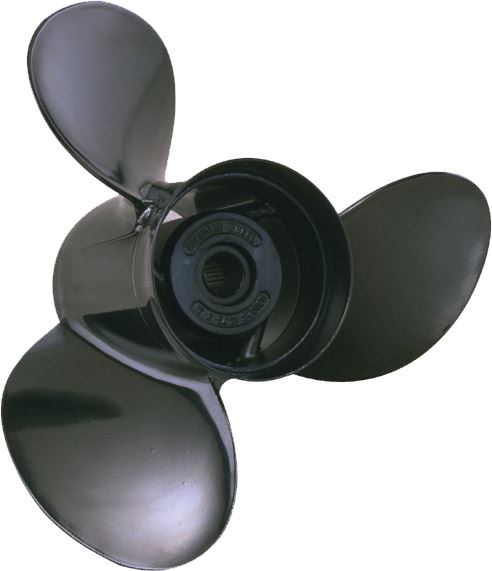
Diameter is the width of the circle that the Yamaha prop would make when rotating.

Prop diameter does not affect the fit of the prop on a boat.

The diameter of your Yamaha prop can vary by up to 1/2" with no discernable change in performance.

Caution: Before increasing the diameter of your Yamaha prop, make sure there will be enough clearance between the blades and cavitation plate or anode on your engine.
Propeller Diameter

Close Window

Pitch: Diameter: Differences in Diameter
Material: Stainless vs. Aluminum Blades: 3-Blade vs. 4-Blade
Your Engine:
Reset Above Filters
The below propeller brands will fit on your selected Yamaha engine. However, to ensure proper loading of your engine, please choose the propeller size that most correctly matches your existing propeller. Please use the engine filter above to narrow your Yamaha propeller options to your specific engine. Please CLICK on the below brands to see the list of products associated to that brand.

For Yamaha outboard engine owners around the globe, Deep Blue Yacht Supply is your trusted source for all size Yamaha boat propellers. We are committed to providing the best Yamaha props, at the lowest prices, with superior customer service.

Deep Blue Yacht Supply has the largest inventory of Stainless Yamaha & Aluminum Yamaha boat props; you will be sure to find the best prop for your Yamaha outboard.

Deep Blue only sells new Yamaha boat props, which price-wise are very comparable to used props; don’t settle for used boat propellers, when you can buy new Yamaha boat props for around the same amount.

Need help finding the perfect boat propeller for your Yamaha outboard? Use our state of the art Propeller Guide to find the perfect propeller for your Yamaha Outboard. Trust Deep Blue Yacht Supply to help equip your Yamaha Outboard with the best possible boat props. Deep Blue Yacht Supply is able to provide the ultimate sales and service experience, when it comes to selecting the best propellers for your Yamaha Outboard.

Yamaha Boat Propellers Improve Performance

Boating enthusiasts who need new Yamaha boat propellers are generally pleased with their outboard motors.  They may need replacement Yamaha boat props because their original props have been damaged through ordinary wear and tear over time, or they may be looking for Yamaha boat propellers because a specific event has damaged the original prop that came with their engine.

Yamaha outboard motors are produced by Yamaha Motor Company Limited, a company that is a part of the overall Yamaha Corporation brand, which is headquartered out of Iwata, Shizuoka, Japan.  One reason why Yamaha outboards are so popular is, oddly enough, Yamaha’s extensive research into improvements for acoustic pianos.  The research needed for those improvements has meant that Yamaha has gained expertise in the use of metal alloys that are reliable
and strong, yet remain remarkably lightweight.  These advances in alloy technology have allowed Yamaha Motor to produce a variety of marine engines that are greatly appreciated by boaters.

Despite the quality and reliability of Yamaha outboards, some boaters will eventually want a replacement propeller.  Others will want to shop for a new propeller much sooner.  These boaters are generally interested in high performance and they want to customize their motor and engine with a specific propeller that will improve qualities such as acceleration or top speed.  The original propeller that came with their Yamaha outboard can be held in reserve to serve as an emergency prop in case they have a problem out on the water at some point in the future.

Choices for Yamaha Propellers

Michigan Match Yamaha boat propellers come in a variety of diameters and pitches, but in other ways, this propeller line is uniform.  For example, all Michigan Match Yamaha Boat Props are made of aluminum.  They also all have three blades and adhere to right-handed rotation.

Ballistic Yamaha boat propellers, in contrast, are available in stainless steel instead of aluminum and offer boating enthusiasts the choice of either 3 or 4 blades – though in the Ballistic line, there are many more 3-bladed than 4-bladed options.  In addition, the Ballistic line does offer an occasional propeller with left-handed rotation; the majority of options have right-handed rotation.

Vortex aluminum Yamaha props all offer right-handed rotation.  Again, most are 3-bladed but some 4-bladed options are available.  Diameters in this line range from 10″ up to 15 ¼” and a wide variety of pitches are available, resulting in many different permutations so that boaters can choose the propeller most likely to yield the performance results they desire.

For example, the Vortex 992003 propeller has a diameter of 15″, very nearly the maximum in this line, and offers a pitch value of 17″.  It has three blades and uses right-handed rotation.  This propeller will work with a large variety of engines, from a 200 HP Thru Hub Exhaust first produced in 1976 to a 300 HP E-Tec engine still in production today.

With such a diverse collection of propellers that will work with Yamaha outboard engines, boaters can truly customize their watercraft to make their boating experiences all the more enjoyable.

Warning Signs: When You Need a New Propeller

Experienced boating enthusiasts know to check the physical condition of their boat, motor, and propeller on a regular basis – and they know how to recognize the warning signs that indicate it is time to look for a new propeller.  Boaters may need to buy new Yamaha outboard propellers to replace their existing ones when they see, for example, evidence of cracking across any of the blades in their current propeller solution.  Other warning signs include bent blades or blades whose surface edges show signs of wear.  These usually show up as tiny missing pieces along the edge.

It may also be time to look into Yamaha outboard propellers of you notice a new source of vibration in your boat.  Propellers that are damaged can cause such vibrations, as can propellers that have been improperly repaired.  Another warning sign is that the propeller cavitates a great deal while under a load, or if you notice it slipping excessively.  While some cavitation and / or slip is to be expected due to factors such as driver error or the motor design, a great deal of either should not be tolerated.  Quite often, a better aftermarket propeller match can solve the problem.

A poor match of propeller can cause other kinds of performance issues.  For example, if the motor on your boat runs without issues, yet you cannot get it to achieve the RPM claimed by the manufacturer, the propeller may be the issue.  In this case, running the wrong propeller will mean wasting precious fuel.

Terms Used to Describe Boat Propellers

Boating enthusiasts who go shopping for Yamaha boat propellers will quickly realize that like all sporting activities, boating has a vocabulary all its own.  Nowhere is this truer than in the field of aftermarket propellers, where terms such as “diameter,” “pitch,” and “rake” are used all the time, in many cases without explanation.  Use this brief guide to help you gain a better understanding of propeller design terminology.

Diameter

This word means what novice boaters may expect: it describes the distance across the propeller.  Diameter is calculated by measuring from the furthest edge of a blade to the middle of the central hub, and then multiplying that figure by two.

It is not universally true that “bigger is better” when it comes to propeller diameter.  Larger Yamaha propellers will require more fuel consumption and some boats can only accommodate a smaller propeller.

Pitch

The meaning of this term is less obvious to the novice.  Pitch refers to the distance that the propeller moves each time it makes a complete revolution.  The force of water spinning through it will cause it to move back (or forward, depending on your point of view) a certain linear distance.  The more pitch a propeller has, the more it will move every time the blades revolve 360 degrees.

Rake

Rake on Yamaha props refers to the angle that the blade sits at compared to the hub.  Zero degrees of rake would mean that the propellers sit at a perpendicular angle.

Image
Fast Shipping, Lowest Prices, No Sales Tax


Site Map
  Processing...